
Free shipping
On orders over €99
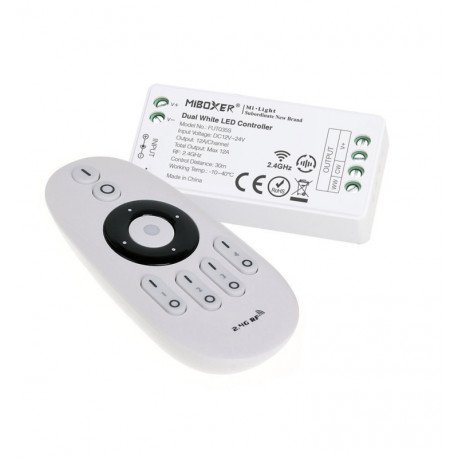

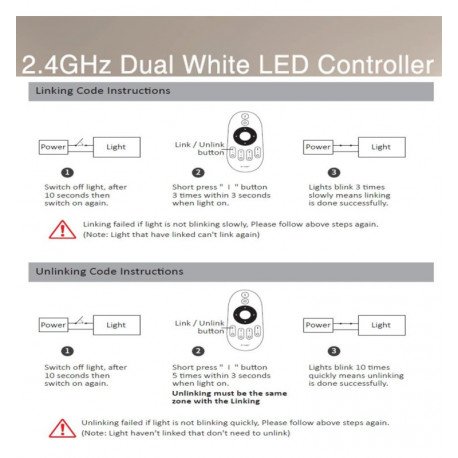
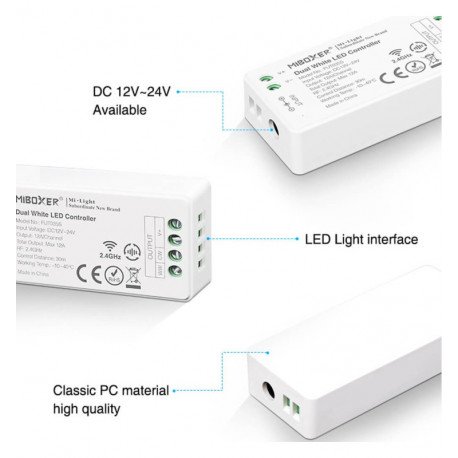
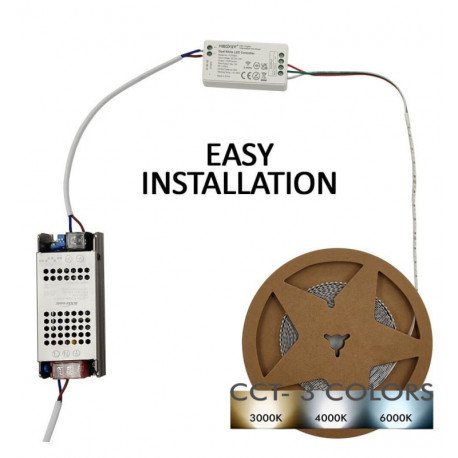
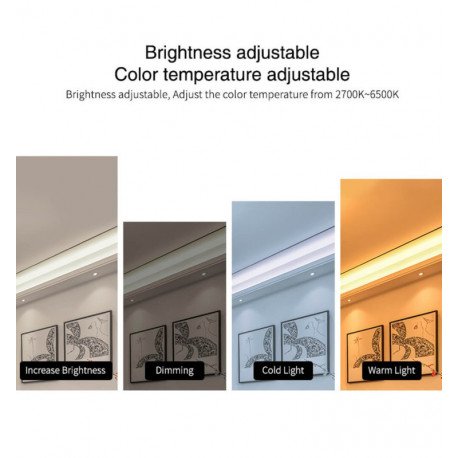

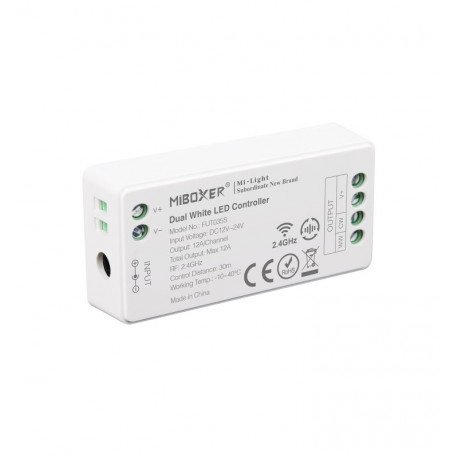
LED CCT Dual Mini RF Controller 4 Zones 12A w/ Remote
LED-00499
Certificates
CE - ROHS
Construction Material
Thermoplastic
Dimensions (mm)
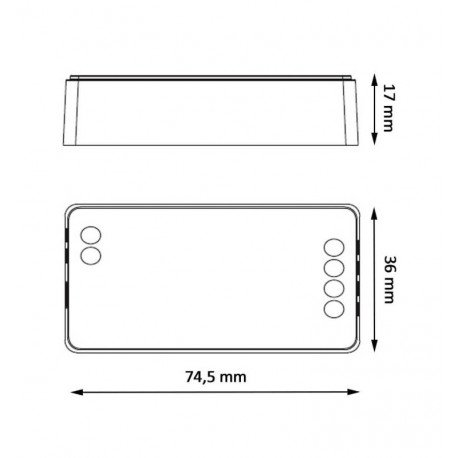
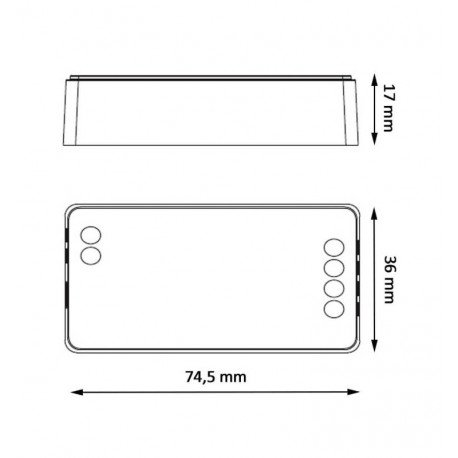
17x36x74.5 mm
Rated Power
12V: 144W - 24V-288W
New product
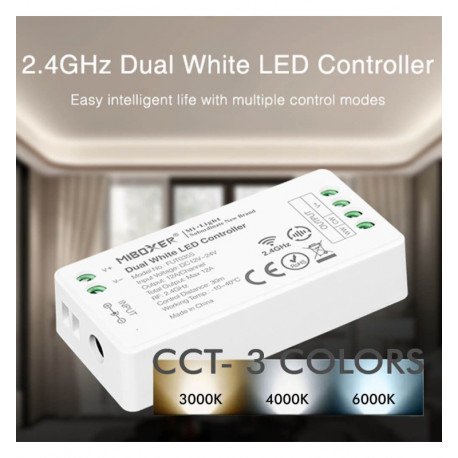
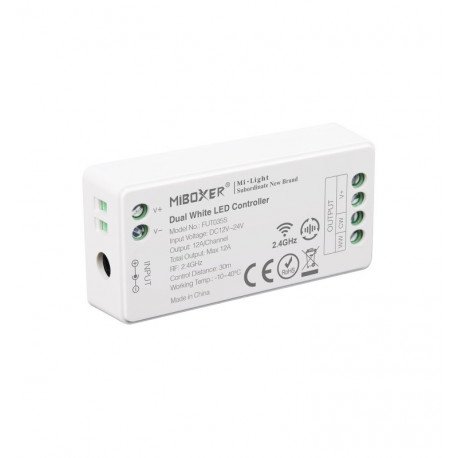
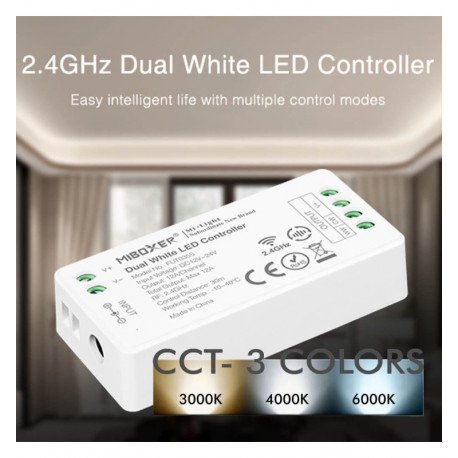
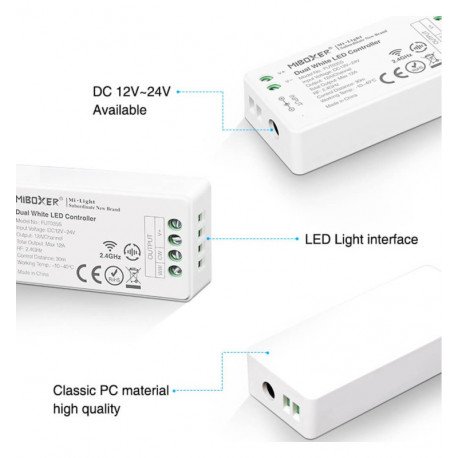
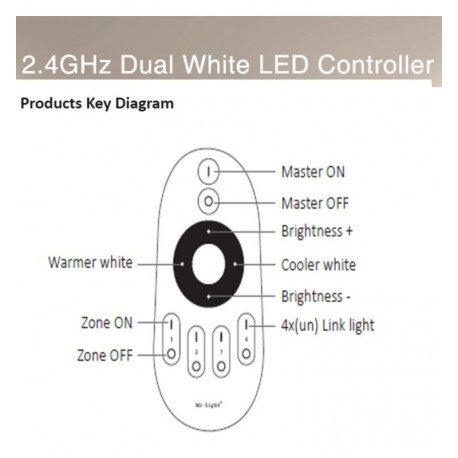
Compact LED CCT Dual Mini RF Controller for precise 4-zone control of color temperature and brightness in CCT LED strips. Supports up to 12A current, with remote operation at 2.4GHz and IP20 protection. Dimensions 17x36x74.5mm, constructed from thermoplastic, backed by a 3-year warranty.
This product is no longer in stock

More info
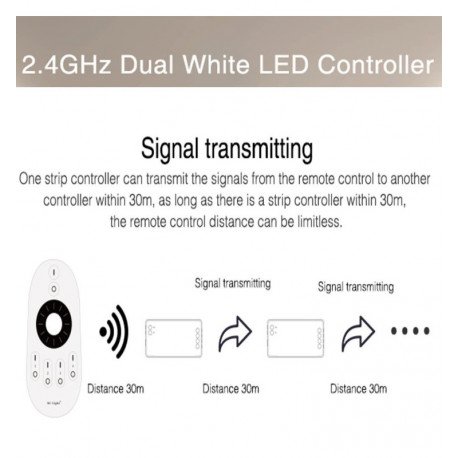
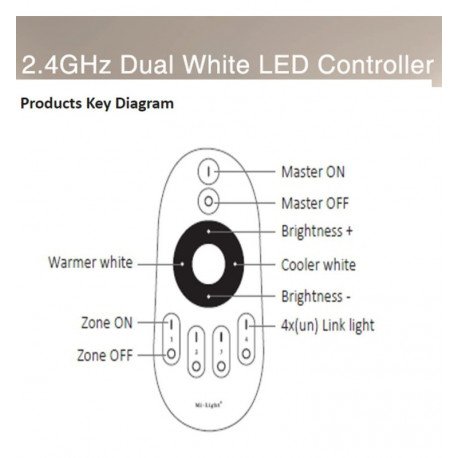
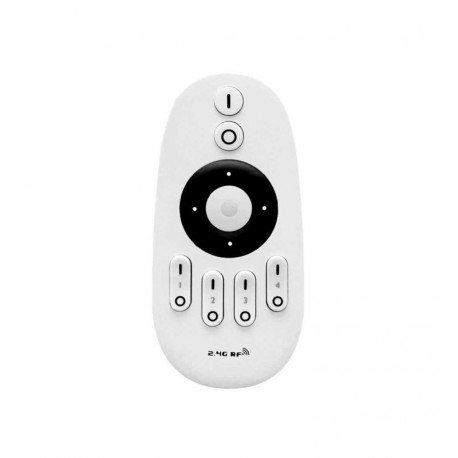
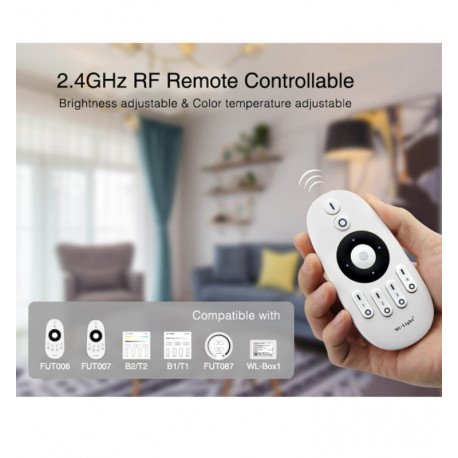
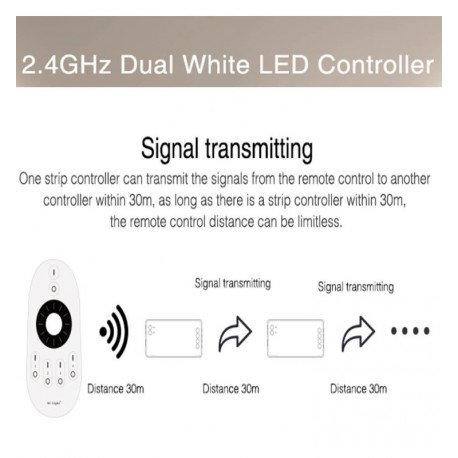
LED CCT Dual Mini RF Controller, 4 Zones 12A + Remote. Enjoy flexible lighting with precise control of color temperature and brightness for CCT LED strips. Includes the 2.4Ghz FR controller and a remote to manage up to 4 zones, selecting white tones from 2700K to 6500K. You can program combinations across the different zones. The RF receiver operating distance must not exceed 30 meters.
Technical Specifications
The controller features an ingress protection rating of IP20, indicating suitability for indoor use in dry environments. It is built with durable thermoplastic material to ensure lightweight and reliable performance.
Its compact size measures 17mm in height, 36mm in width, and 74.5mm in length, allowing for easy installation in confined spaces.
The device supports a maximum load of 12 amperes and can manage up to four independent lighting zones, enabling customized lighting scenes across multiple areas.
Operation and Compatibility
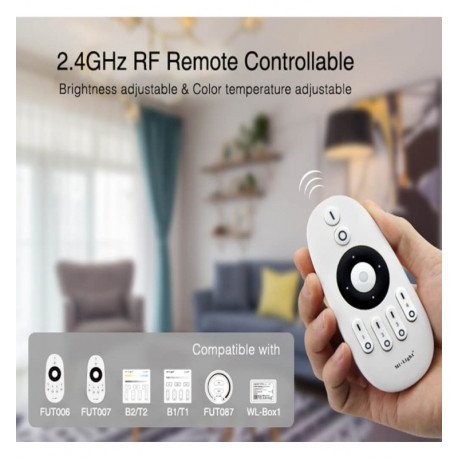
Operating on a 2.4GHz radio frequency, the controller communicates wirelessly with its remote control, permitting adjustments from a distance up to 30 meters. This facilitates convenient and flexible lighting management.
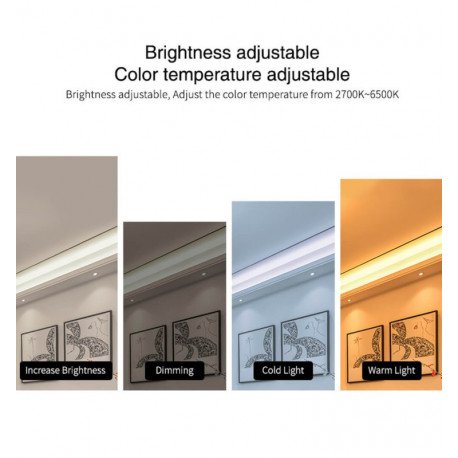
The controller is specifically designed to work with CCT LED strips, enabling seamless selection of white tones ranging from warm 2700K to cool 6500K color temperatures.
Multiple zones can be programmed with different brightness and color temperature combinations, offering versatile lighting solutions for various settings.
Frequently Asked Questions
What is the maximum current supported by the LED controller?
The controller supports a maximum current of 12 amperes, suitable for controlling multiple LED strips within this limit.
Can I use this controller outdoors?
No, with an IP20 rating, the controller is intended for indoor use only and should be installed in dry environments.
How many lighting zones can I control with this device?
You can manage up to four independent lighting zones, each adjustable for brightness and color temperature.
What is the wireless range of the remote control?
The remote operates on a 2.4GHz frequency and functions reliably within a distance of up to 30 meters from the controller.
View technical specifications Hide technical specifications
Certificates
CE - ROHS
IP Rating
IP20
Construction Material
Thermoplastic
Warranty years
3
Dimensions (mm)
17x36x74.5 mm
Rated Power
12V: 144W - 24V-288W
Rated Voltage
DC 12-24V
Operating Frequency (Hz)
2.4Ghz
Light Temperature
CCT -2000K to 7000K
Range (m)
30m
Controllers for RGB, RGBW, CCT and single-colour LED strips
LED strip controllers make it possible to switch a lighting installation on and off, adjust its brightness and configure its operation. Depending on the strip type, they can also change the colour temperature, select colours and create dynamic effects or transitions.
At DomiLED you will find controllers for LED strip lights designed for single-colour, CCT, RGB, RGBW and RGB+CCT systems. Before selecting a model, check the operating voltage, number of channels and total connected power.
Which controller does each LED strip require?
- Single-colour controller: adjusts the brightness of a strip with one fixed colour, such as warm, neutral or cool white, red, green or blue.
- CCT controller: mixes two white channels to adjust the light from warm white to cool white.
- RGB controller: manages the red, green and blue channels to create different colours and lighting effects.
- RGBW controller: controls the three RGB channels and an independent white channel for both coloured effects and practical white illumination.
- RGB+CCT controller: manages RGB together with warm and cool white channels in compatible installations.
The controller must match the type of LED strip. An RGB controller cannot correctly manage an RGBW or CCT strip because the number of channels and electrical connections is different.
Voltage, current and maximum power
The controller must support the operating voltage of the LED strip, such as 12V or 24V DC. Never use a controller or strip with an incompatible voltage.
Check the maximum current per channel and the total supported power. Calculate the load by multiplying the strip’s consumption per metre by the installed length. The result must remain below the controller’s maximum capacity, with an appropriate safety margin.
If the installation exceeds the supported load, it may need to be divided between several controllers or expanded with a compatible signal amplifier. Overloading the device can cause malfunction, overheating or damage.
Remote, wall and smart control
Depending on the model, an LED strip can be managed through a remote control, wall panel, push button, mobile application or automation system. Radio-frequency controls do not normally require a direct line of sight between the remote and receiver, while infrared systems generally do.
Wi-Fi, Bluetooth and smart-system controllers may offer app control, schedules, scenes and additional functions. Before ordering, check the communication protocol and its compatibility with the remote, gateway or control platform.
Controllers for addressable LED strips
Addressable LED strips require a dedicated controller capable of sending data to the integrated circuit of each LED or LED group. They do not operate in the same way as conventional analogue RGB strips.
For these systems, the voltage, chip type, data signal and controller configuration must all be compatible. Incorrect connections may prevent operation or damage the electronic components.
How to connect an LED strip controller
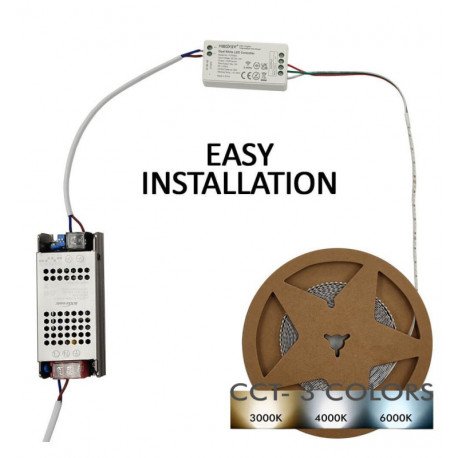
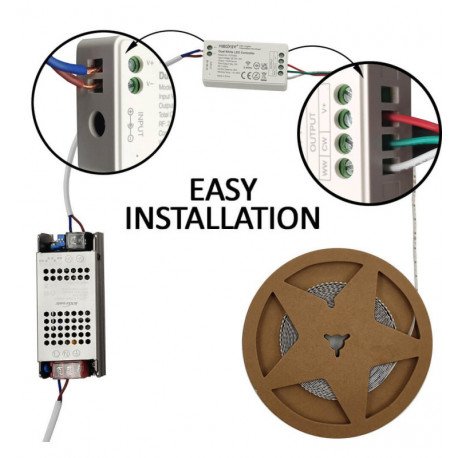
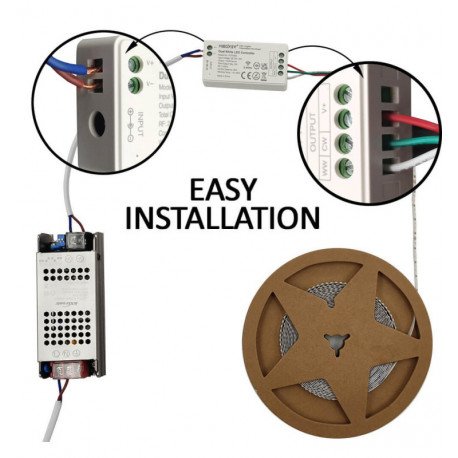
In a conventional installation, the power supply is connected to the controller input and the LED strip to its output channels. Observe the polarity, identify each channel correctly and complete all wiring with the electrical supply disconnected.
Use cables with a suitable cross-section for the current and distance. Long runs may require additional power injection points to prevent voltage drop and visible differences in brightness or colour.
Explore our selection of LED strip controllers, remote controls, receivers, dimmers and signal amplifiers and find the correct system for adjusting brightness, colours and lighting effects.
Guaranteed returns
14 days to return your purchase
Technical advice
We help you choose the right lighting
Secure payment
Your data and payments are protected